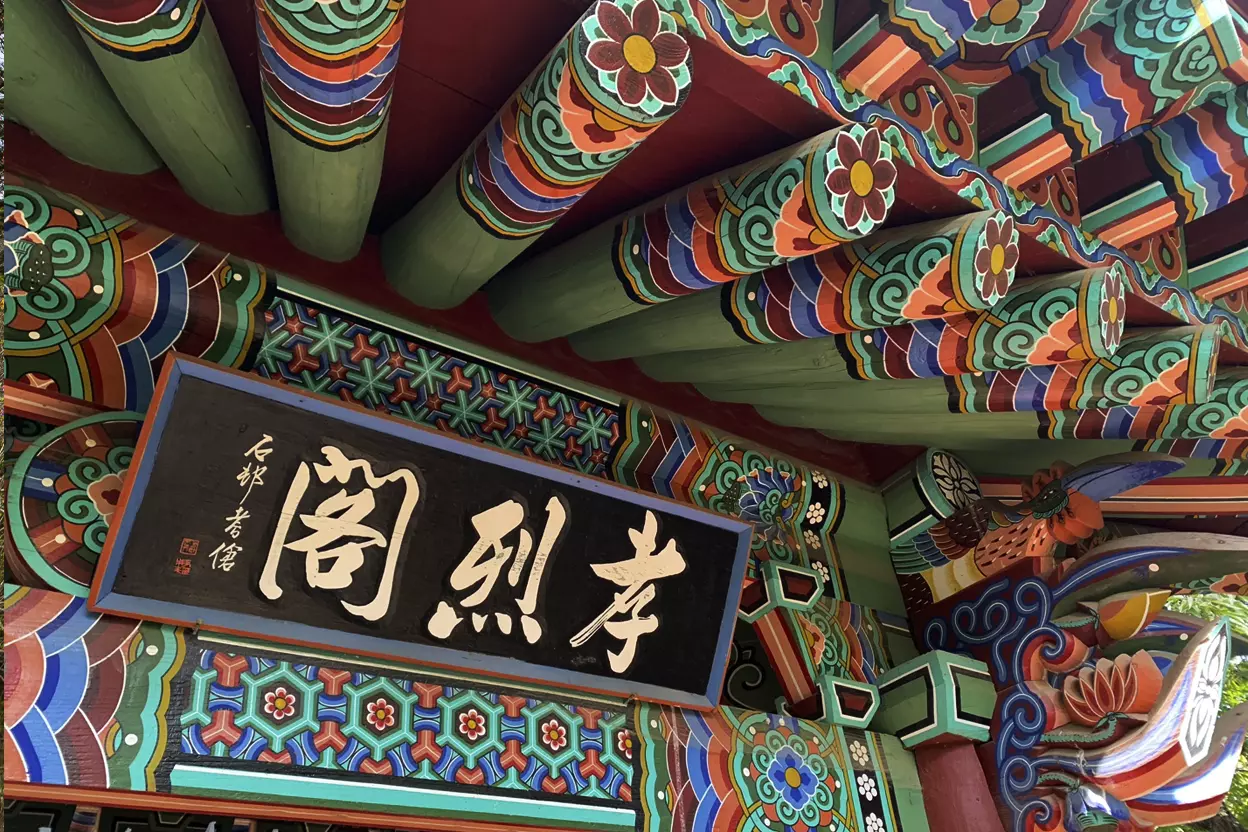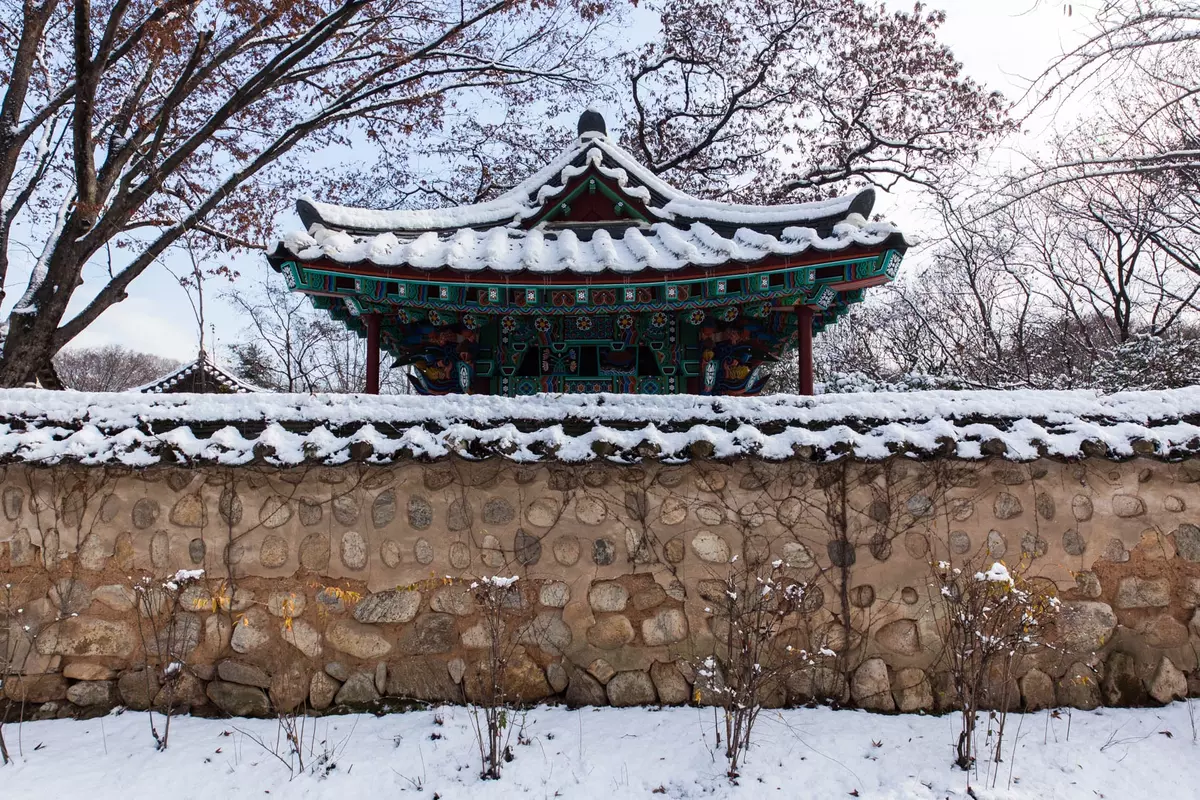
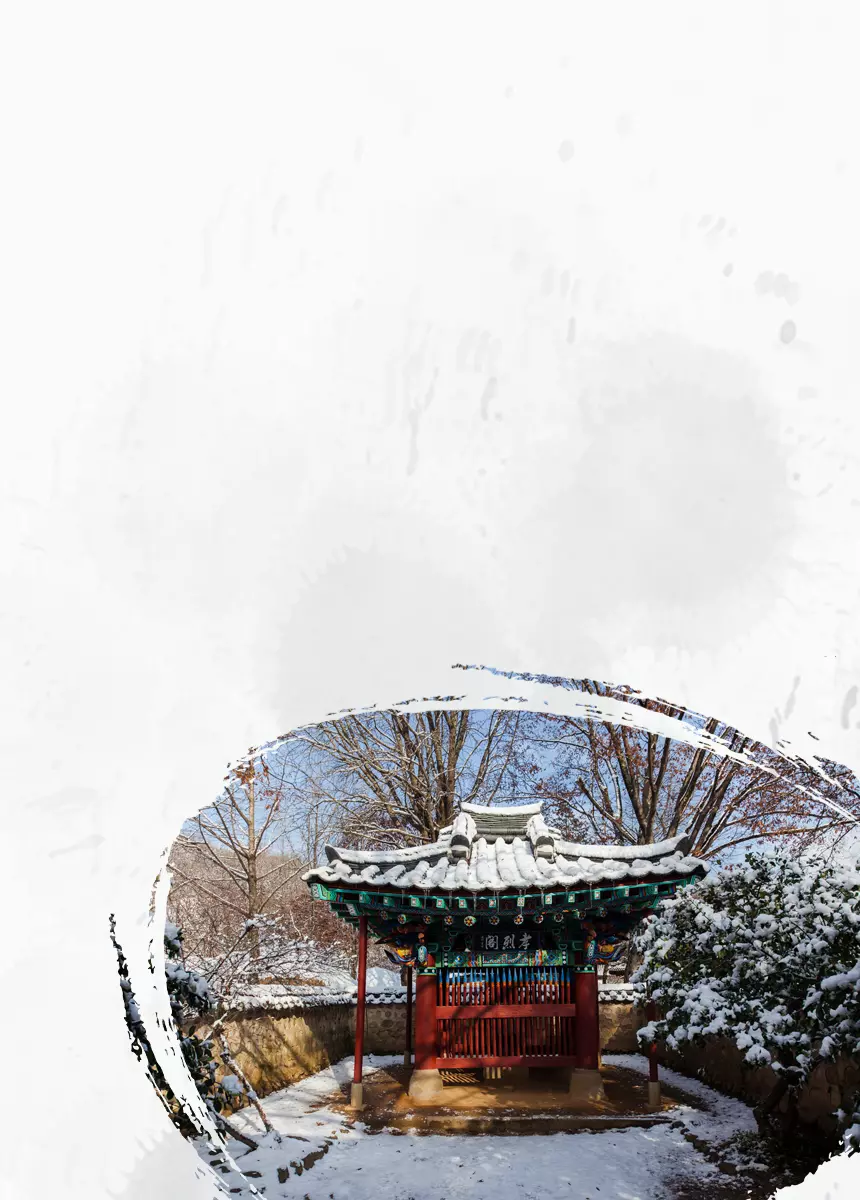
This pavilion, originally located in Suncheon, Jeollanam-do, was relocated to its current position in the Korean Folk Village, preserving its original form.
Unlike typical Hyo-yeol-gak pavilions that display wooden plaque tablets (Jeongryeomun Panaek), this one features a vertically inscribed stone stele titled
"The Commemorative Stele of the Filial and Virtuous Lady Hwang" (Hwang Hyo-bu Gihaengbi), suggesting its function is best described as the “Memorial Pavilion for Lady Hwang’s Filial Devotion.”
Lady Hwang married into the Gyeongju Kim clan, becoming the wife of Kim Jong-ju.
She was a descendant of Hwang Hui, a prominent Prime Minister from the Jangsu Hwang clan.
After her marriage, she sincerely practiced filial piety by dutifully serving her in-laws with utmost respect and devotion.
Her behavior deeply moved her extended family, and she was widely praised throughout the village.
Tragically, her father-in-law and husband both fell gravely ill and were bedridden. She cared for them day and night, even tasting their medicine first to ensure its safety.
She prayed earnestly for their recovery and even wished to take on their illness herself. As their conditions worsened and they neared death, she cut her finger and fed them her blood in an attempt to extend their lives, which reportedly prolonged their lives by three days.
Moved by her filial piety and unwavering devotion to her husband, the local community erected a commemorative stele in her honor.
The inscription was written by Kim Seok-gu, a third-rank official and magistrate of Suncheon from the Gyeongju Kim clan.
Jang Jeon-gi, a representative of the Suncheon Confucian scholars, served as the official supervisor of the stele's construction.
The stele is made of black stone and shaped with a square base and rounded top. The front reads:
"Commemorative Stele of the Filial and Virtuous Lady Hwang of the Jangsu Hwang Clan"
The side bears the inscription "Inscription on the Stele of Lady Hwang’s Deeds", detailing her exemplary acts of filial piety and virtue.