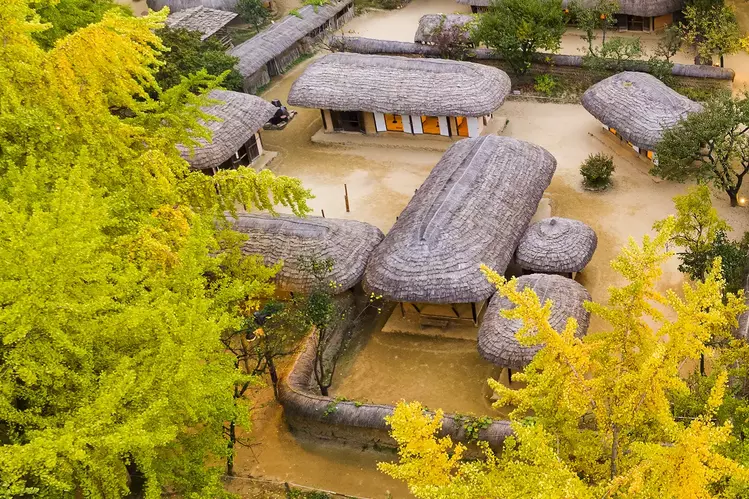

This is a restored house that once belonged to a small farming household in Jangsan-ri, Jangseong-eup, Jangseong-gun, Jeollanam-do.
It’s a modest structure with just over three rooms.
In this house, people were making jori (grain sifters) using joritdae, a type of bamboo grass.
A jori is a tool used to remove stones from grains by stirring them in water. Based on this concept, the bokjori (literally “fortune sifter”) symbolizes sifting out misfortune and keeping only good fortune. In the past, people would buy bokjori sold by traveling vendors at the beginning of the year, place money and taffy inside, and hang them on walls or doors to pray for good luck and prosperity.
In this house, you can also find various traditional items made from straw, such as dunggumi (a rice storage basket), egg baskets, samtaegi (a three-legged basket), jongdaraekki (small baskets), basokuri made from willow twigs, chaeban (sieves), and woven baskets. These were all tools handmade and used by farmers in their daily agricultural work.
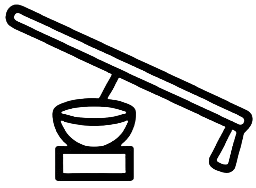
In the yard, there is a jojakbanga, a foot-operated pounding mill. It is a modified version of the traditional diddilbanga (treadle mill), allowing a single person to operate it alone.