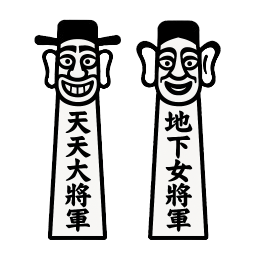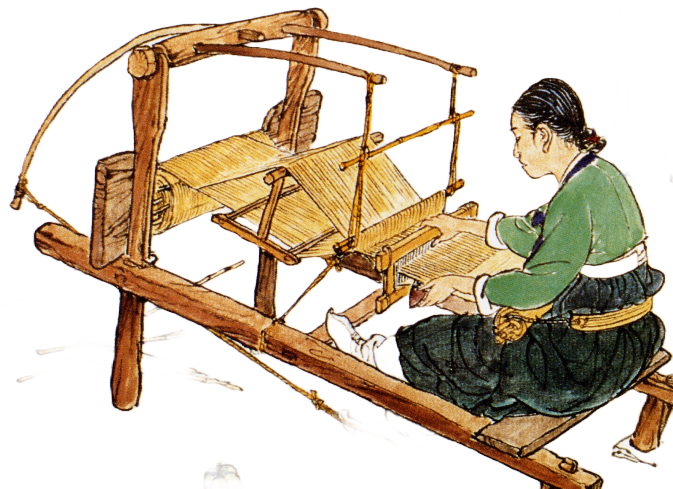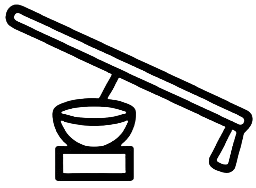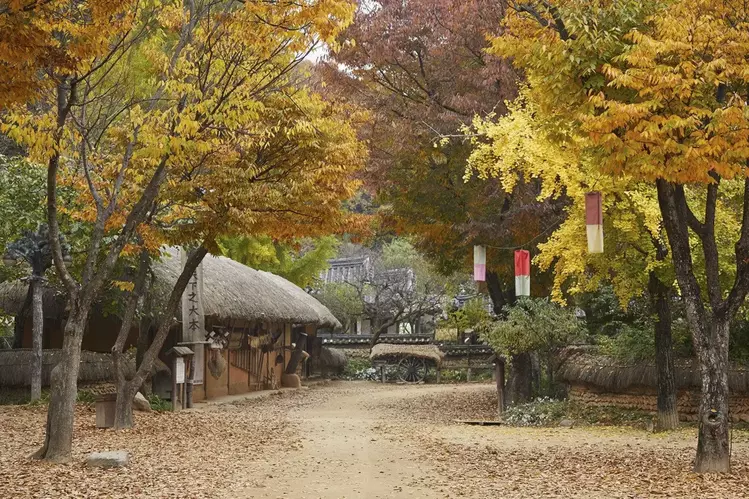
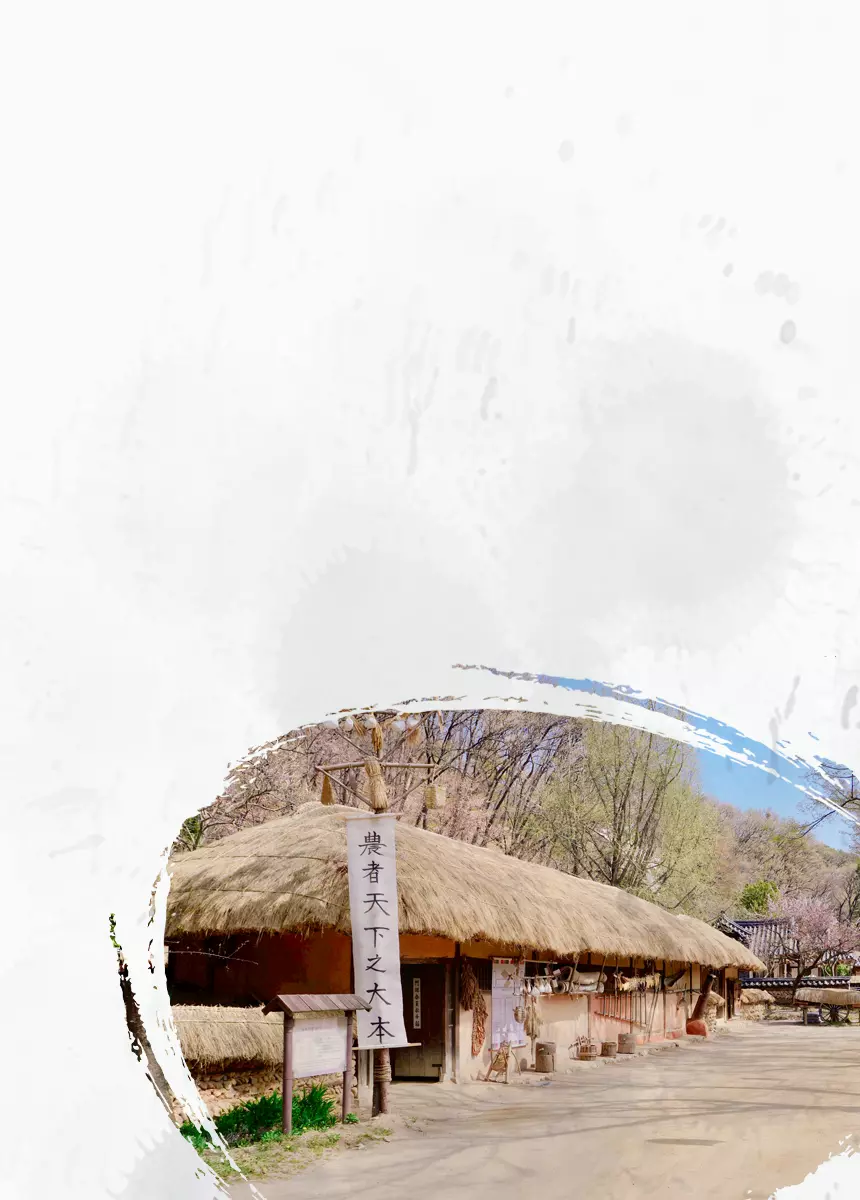
Welcome! This is a farmer’s house in the southern part from Joseon Dynasty. The name of the tall pole standing in front of the house is Grain Poles.
In farming houses of Joseon Dynasty, residents wrapped grains such as rice or barley together the night before the first full moon day of Lunar New Year,
put them on the Grain Poles, and wished their farming to go well that year.
This farmer’s house was owned by a farmer who was a commoner,
but had a space where his farmhand stayed, and was quite formal, showing that it was the house of a rich farmer who was quiet well-off in the Honam region.
This house follows a typical form of the southern part. The Inner Wing and Bakkatchae were aligned together
for ventilation due to the hot and humid weather in the summer. Also, there was a hall between rooms and many windows were built.
Even a roof contains our ancestors’ wisdom. The roof of a straw-thatched house was made by stacking layers of straw thatch that rot and had insects living as time went by, s
o old straw thatch was removed and new straw thatch was weaved together after harvesting was over every year.
Lastly, don’t miss the lavatory! It is today’s bathroom, and during Joseon Dynasty it was kept in the farthest place from a house.
Inside the lavatory was a urine carrier, an agricultural tool, which had a shape of pot and carried poop and urine.
This tool was prepared because poop and urine were used as great fertilizers for crops in Joseon Dynasty, which had no other fertilizers.