Play

[32] House in the southern part

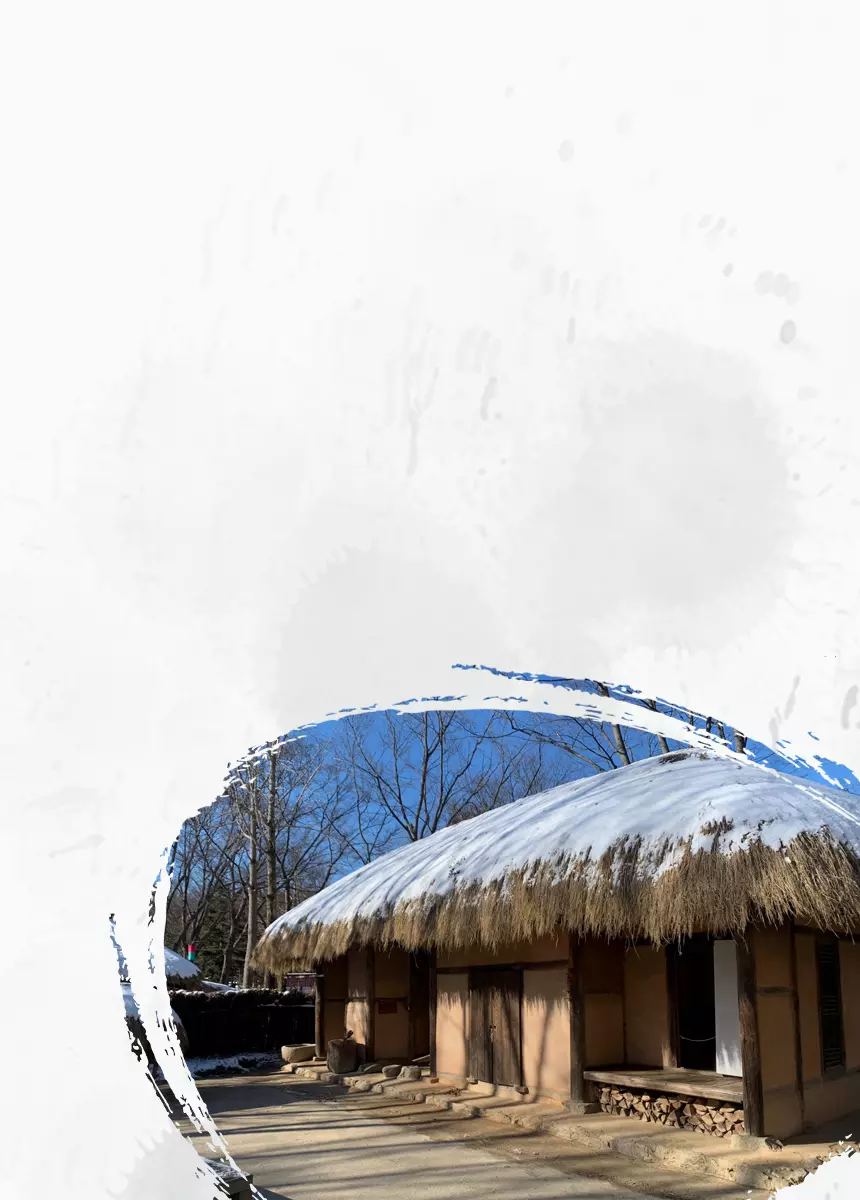
This house is a restored farmhouse from Mangho-ri, Yeongam-eup, Yeongam-gun, Jeollanam-do. Here, you can clearly see the open and spacious characteristics of southern-style traditional houses. Two thatched-roof houses, each in a straight “―” shape, are arranged in an “L”shape typical of southern regions.

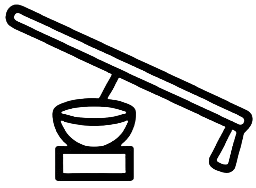
The main house (Anchae) has a single wooden floor (maru) in the center, with ondol-heated rooms on either side. The detached building (Araechae) includes a cowshed, a pounding mill room (didilbangatgan), a kitchen, and a guest room (sarangbang) with a small side porch (jjokmaru). Due to the warm and humid climate, the maru (wooden floor) is well-developed. The roof has a steep pitch to withstand heavy rainfall, and the tobang (earthen veranda) is relatively high off the ground. In the yard, you’ll find a “naraekduju”, a traditional storage container for grains. It is made by splitting and weaving bamboo into a round wall, covered with thatch for the roof, and topped with a conical hood. It is mainly used to store rice, sorghum, or buckwheat. The word “narak” refers to rice, so “naraekduju” means a storage container for rice. Today, when we think of a duju (grain storage), we often imagine a piece of furniture, but in the past, it could also be a separate structure like this. In some cases, an entire room in a house was designated as a duju. Therefore, rather than focusing solely on the form, it is more accurate to understand the word “duju” based on its function.