 아랫마을
아랫마을






 윗마을
윗마을


 건너마을
건너마을





 시설물
시설물
 운영안내
운영안내



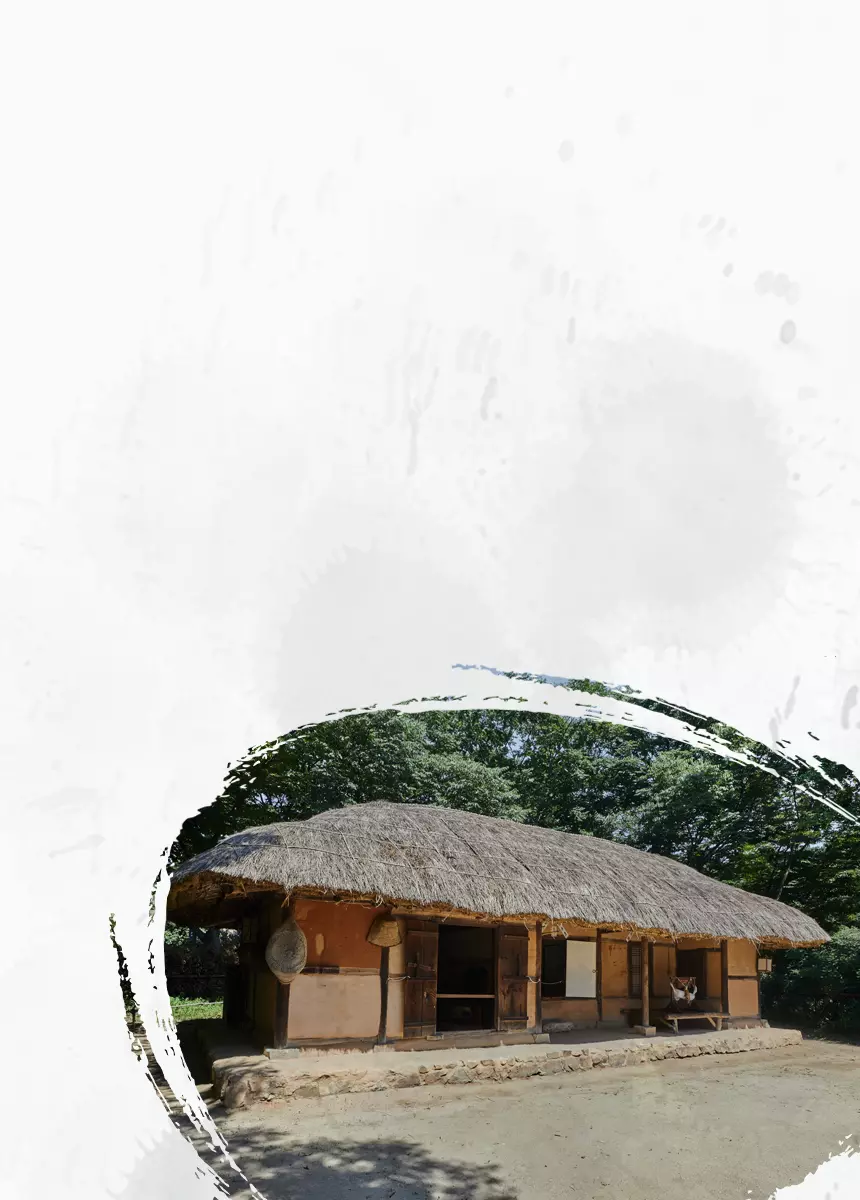
[29] Farmer’s House in the Central Part
As you walk toward the performance hall, you’ll come across a house with a spacious yard enclosed by a fence made of woven twigs (ssari). This house is a restored traditional home from Naesan-ri, Useong-myeon, Gongju-gun, in South Chungcheong Province.
It is a relatively small-sized house typical of Korea’s central region. In the main quarters (anchae), the main room (anbang) is connected to an adjacent upper room (witbang), and a long narrow room (golbang) is connected further inward. At the far end of the anbang, there is a small storage space (gwang). The large kitchen is divided into compartments, with a pantry (changan) and another storage room arranged for practical use. Inside this house, you’ll find a goenari botjime—a traditional bundle used for carrying small items wrapped in cloth, typically slung over the shoulder during long journeys. The term has been in use for quite some time and even appears in newspaper articles from the Japanese colonial period. While the goenari botjime and straw shoes (jipsin), known as emergency footwear, are quite well known, during the Joseon Dynasty people would pack essential travel items such as emergency food, clothing, bedding, and seat cushions in these bundles. In some cases, people even carried paper, ink stones, and ink to prepare for state exams (gwageo) during their travels.
