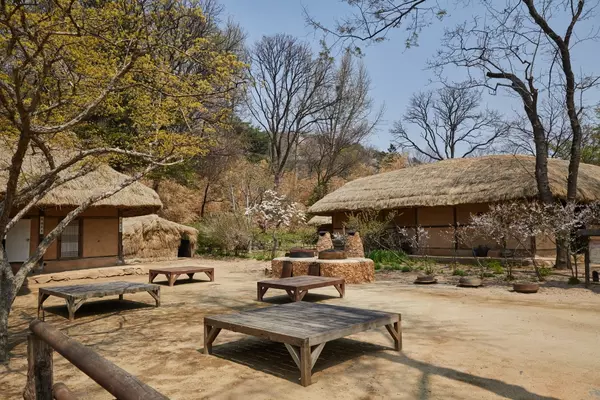
As you walk along the viewing path, you’ll come across a house with a wide open yard, free of walls.
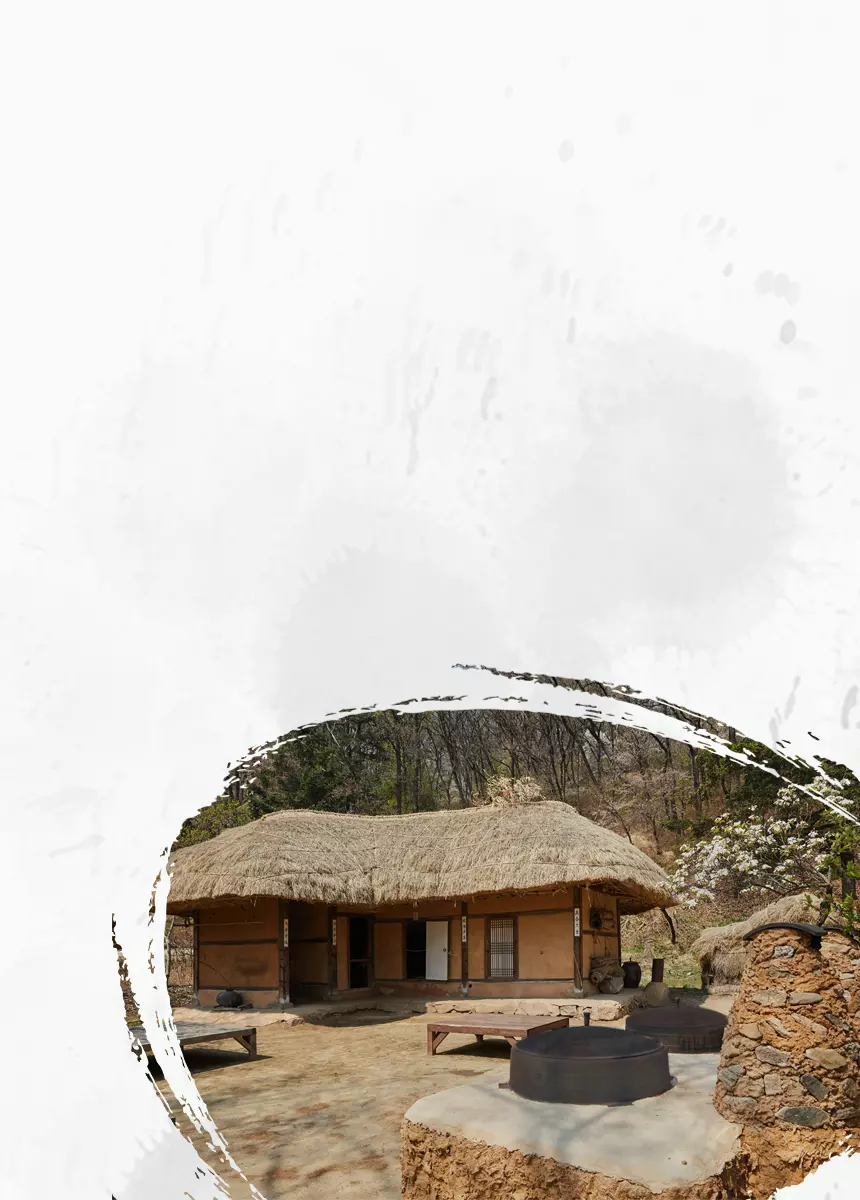
This is a restored small farmhouse originally located in Hari-dong, Pungsan-eup, Andong-gun, Gyeongsangbuk-do.
The house, shaped like the “L” is a modest farmhouse with two rooms and a large kitchen.
It is unusual in that there is no maru (wooden floor) or tobang (earthen floor) between the main room and the upper room, which is a rare design in traditional farmhouses.
This structure appears to have been designed for efficient living in inland areas where a maru was not necessary due to the climate.
This home also features a large buttumak (kitchen hearth) and an added stable.
Although the building is small, the individual rooms are quite spacious, making it suitable to serve as a jumak (traditional tavern).
In the tavern’s wide yard, many travelers could stop by to eat or even sleep for the night.
Since many people gathered at taverns, they often served as information hubs, places of cultural exchange, and even centers for entertainment.
As you stand in this open yard, imagine the lively conversations and stories that once filled this space.